Steve Brown’s Vision for the Future of Intelligent Business
In a compelling keynote, futurist and AI strategist Steve Brown laid out a bold vision for the future of business in the age of intelligent agents. With experience at Intel and Google DeepMind, and as the author of The AI Ultimatum, Brown brings a unique perspective to the rapidly evolving landscape of artificial intelligence. His message was clear: AI agents are not just tools. They are the foundation of a new industrial age.
“AI is the most important thing that’s going to happen in about 500 years, maybe a thousand years in human society and it’s happening in our lifetime,” Brown quoted Eric Schmidt, former CEO of Google.
Brown’s presentation was a wake-up call for leaders across industries, including retail, manufacturing, banking, and supply chain management. He emphasized that regardless of sector, every organization is grappling with the same question:
What does AI mean for the future of our business and how do we use agents to amplify what we do?
5 Key Takeaways
We’ve gathered the 5 big takeaways from Steve’s presentation that will change your thinking and how to surf the AI wave.
1. We Are Entering a New Industrial Age
Brown likened the rise of AI agents to previous industrial revolutions, noting that the cost of general-purpose intelligence is rapidly approaching zero, just as electricity did in the early 20th century.
“We’re seeing that the cost of general-purpose, highly capable intelligence heading down towards zero. It won’t be free, but it’s getting to the point where you will use it extensively without really thinking about it,” said Brown.
This shift, he argued, marks the beginning of the Silicon Age, where intelligence becomes as ubiquitous and invisible as electricity.
2. Spatial and Reasoning AI Are Game-Changers
Brown emphasized the importance of spatial AI, AI that understands 3D space, time, and causality, and reasoning AI, which mimics human analytical thinking.
Brown expanded, “Spatial AI is a way for machines to understand the situation in front of them… It understands cause and effect, physics, and causality.”
These technologies enable agents to operate in real-world environments, powering autonomous vehicles, next-gen robotics, and context-aware assistants.
3. AI Agents Will Reshape the Workforce
Brown introduced the concept of AI agents as modular, autonomous software systems built around large language models. These agents are capable of perception, memory, planning, and action, making them digital coworkers.
Brown predicts, “Your next coworker might well be a machine. And I think that’s a very realistic possibility in 2026 and certainly by 2027.”
He categorized agents into three types:
- Offload agents: Handle repetitive, low-value tasks.
- Elevate agents: Enhance human performance and creativity.
- Extend agents: Provide capabilities beyond human limits.
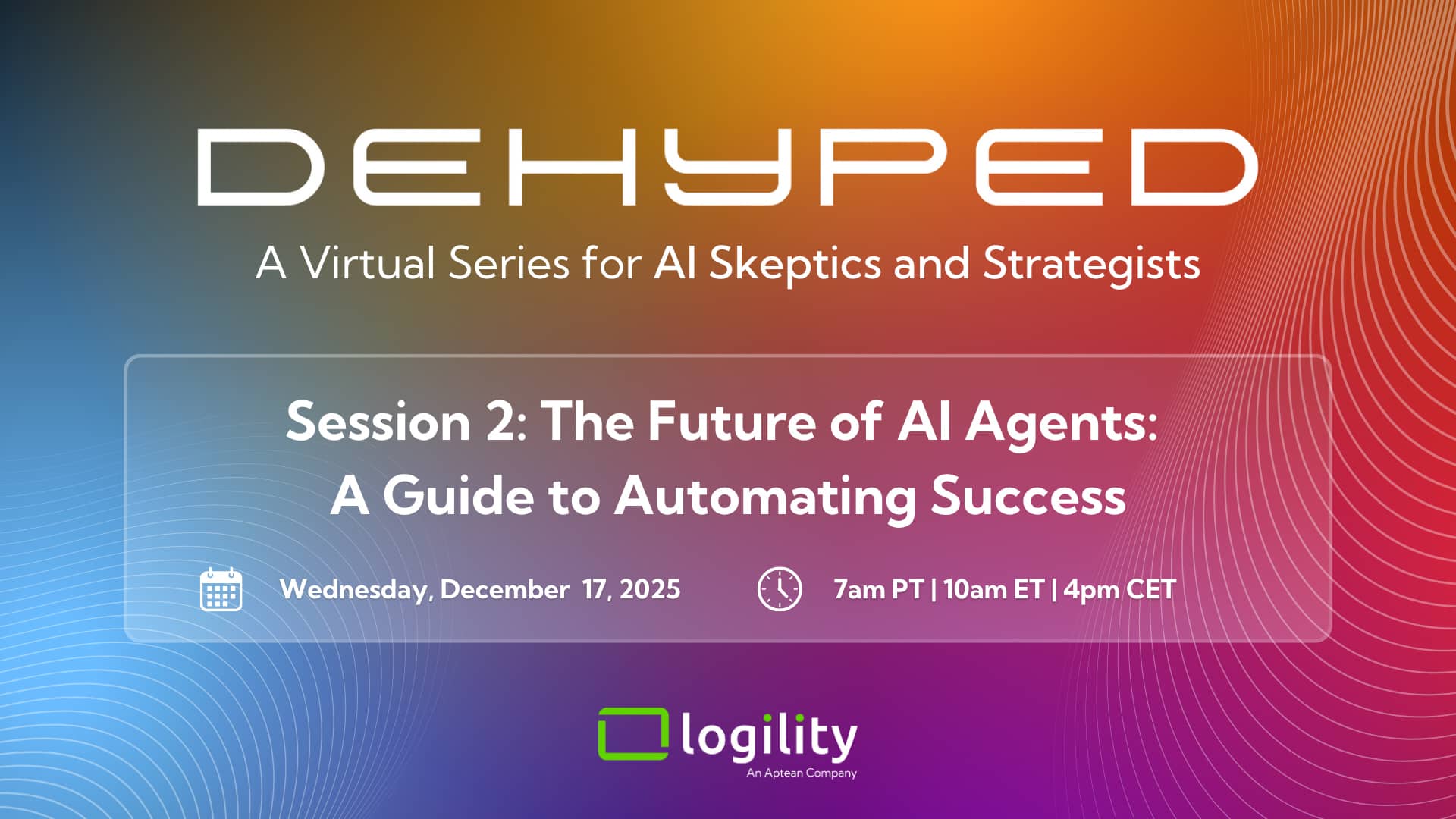
The Future of AI Agents: A Guide to Automating Success.
Don’t miss Steve’s full keynote at Dehyped, where he explains why every company and every person should understand this profound shift and what so-called ‘Agentic AI’ means for the future of work, productivity, and society.
Access now!4. Businesses Must Prepare for Agentic Orchestration
Brown described how agents will work in swarms, orchestrating complex tasks across systems. He cited Walmart’s use of “super agents” like Sparky for customers and Marti for partners as examples of scalable agent ecosystems.
“You’re building this team, which is humans and machines working together, and you are optimizing the way that you deliver value and create value.”
He urged companies to adopt human-machine teaming, breaking down business processes into granular tasks and determining which are best handled by humans, agents, or robots.
5. AI Transformation Starts with Strategy and Data
Brown closed with five actionable steps for successful AI transformation:
- Start with business strategy: A strong AI strategy turbocharges the business strategy.
- Amplify, don’t just automate: The focus should be on on elevate and extend agents.
- Communicate: The value of AI with “What’s in it for me?” (WIIFM) and “What’s in it for us?” (WIIIFU)
- Include everyone: Have the team help create and learn to work with agents.
- Invest in clean, accessible data: Good AI runs on data.
“AI needs good data. Data is the rocket fuel for AIs—both to train them and then for agents so they can access that data to use it to do their jobs,” advised Brown.
Final Thoughts
Steve Brown’s presentation was more than a forecast—it was a call to action. For supply chain leaders, the implications are profound. AI agents can optimize inventory, streamline logistics, and enhance decision-making. But success will depend on strategic vision, data readiness, and a willingness to embrace change.
“There’s an express train of change coming all of our way. If you’ve done the hard work to put agents throughout your business, you’re turning the dial up to 11.”
At Logility, we’re committed to helping businesses navigate this transformation. Whether you’re exploring AI for the first time or scaling your existing capabilities, the time to act is now.